Physical Address
304 North Cardinal St.
Dorchester Center, MA 02124
Physical Address
304 North Cardinal St.
Dorchester Center, MA 02124

SadaPay and Easypaisa are both popular in Pakistan, but they solve different problems. This comparison breaks down fees, debit cards, cash agent access, and savings tools so you can see which wallet actually fits how you spend, save, and get paid.
Ask five people in Pakistan whether SadaPay or Easypaisa is the better wallet, and you’ll likely get five different answers. That’s because the two apps aren’t really fighting for the same job.
SadaPay is a digital-only wallet built around a free Mastercard, zero-fee bank transfers, and tools for freelancers who get paid from abroad. Easypaisa is a full digital bank with a nationwide cash agent network, structured savings products, and more than a decade’s head start signing up people who never had a traditional bank account.
“Better” depends entirely on which of those two jobs you actually need done. Here’s how they compare, feature by feature and fee by fee.

| Feature | SadaPay | Easypaisa |
|---|---|---|
| Backing / regulator | Papara (Turkish fintech); licensed as an Electronic Money Institution (EMI) by the State Bank of Pakistan | Telenor Group and Ant Group; licensed as a Digital Retail Bank (easypaisa digital bank, formerly Telenor Microfinance Bank) |
| Debit card network | Mastercard (physical and virtual) | Visa (physical and virtual) |
| Cash agent network | None — app and bank transfers only | 150,000+ agents nationwide |
| Local bank transfer | Free (Raast) | Free (Raast) |
| Cash withdrawal | ATM only, PKR 35 per withdrawal | Agent cash-out (tiered fee) or ATM, PKR 35 |
| International money | SadaBiz for freelancer payments; Mastercard usable abroad | Receives inbound remittances; not built for sending money abroad |
| Savings tools | Not advertised for personal accounts | Term Deposits, Savings Pocket |
| Best suited for | Freelancers, digital-first spenders | Cash-based users, bill payments, savings |
Neither app wins across the board. SadaPay is leaner and cheaper if your life runs entirely through your phone and a bank account. Easypaisa is more useful if cash, agents, or basic savings matter to how you actually live.
SadaPay is an Islamabad-based digital wallet regulated by the State Bank of Pakistan as an Electronic Money Institution. In 2024, the Turkish fintech Papara acquired the company, adding international backing while SadaPay kept operating under its existing Pakistani license.
The app has grown past 2 million users on a simple pitch: no account-opening fees, no monthly charges, and a Mastercard debit card — physical or virtual — that works both locally and internationally.
Core features include:
What SadaPay doesn’t have is a physical footprint. There’s no agent network, no cash-deposit counters, and no over-the-counter cash-in option — everything runs through the app or a linked bank account.
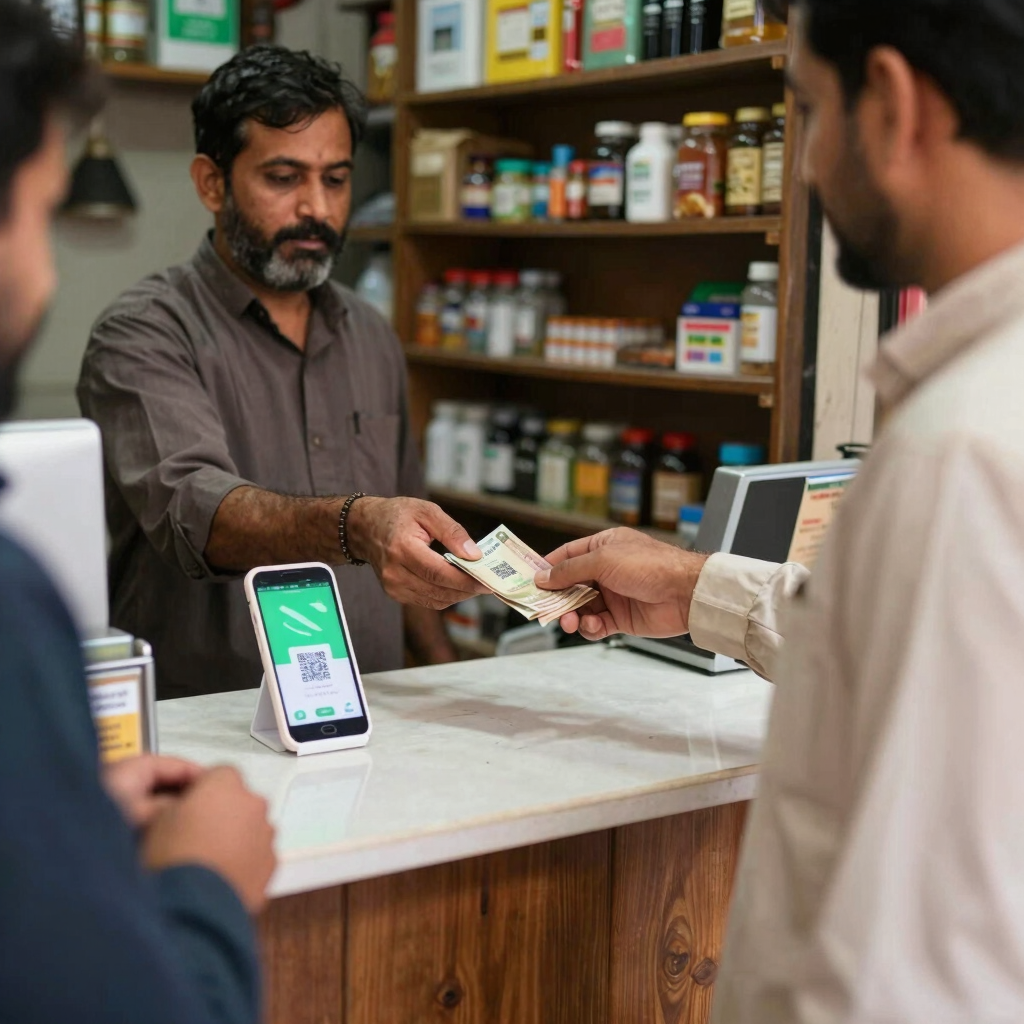
Easypaisa launched in 2009 under Tameer Microfinance Bank, which Telenor Pakistan later acquired and renamed Telenor Microfinance Bank. Ant Group, the company behind Alipay, bought a 45% stake in 2018, making Easypaisa a joint venture between Telenor Group and Ant Group ever since.
In January 2025, the bank rebranded again, this time to “easypaisa digital bank,” operating under Pakistan’s Digital Bank licensing framework rather than as a standard microfinance bank. By 2026, Easypaisa says it serves roughly one in five Pakistanis, processing more than Rs. 15 trillion across 4.5 billion transactions in 2025 alone.
Its core strength has always been reach. Where SadaPay is app-only, Easypaisa runs on:
In January 2026, Easypaisa and Visa announced an expanded partnership to introduce premium debit cards, credit cards, and cross-border payment features — a sign that Easypaisa is actively trying to close the international-spending gap with wallets like SadaPay.
The two apps split along a few clear lines:
Both wallets now issue physical and virtual cards at sign-up or shortly after. SadaPay’s Mastercard is numberless for security, with the card number, expiry, and CVV kept inside the app instead of printed on the plastic. Easypaisa’s Visa card supports contactless NFC payments and is backed by a much larger existing POS and ATM footprint, a legacy advantage from its years as Pakistan’s dominant branchless banking brand.
This is where the two apps diverge most. SadaPay assumes you’re comfortable moving money digitally — its only cash touchpoint is an ATM withdrawal. Easypaisa assumes plenty of its users still need physical cash, so it keeps a massive agent network alive alongside its app, plus free cash handling at its own bank branch counters for Digital Account holders.
Both apps cover the essentials — electricity, gas, internet, and mobile top-ups. SadaPay lists 900+ billers directly in the app. Easypaisa’s list tends to run broader, a byproduct of its longer history as the default branchless banking option for utility payments across Pakistan.
SadaBiz is SadaPay’s clearest differentiator: a dedicated business wallet for receiving client payments from abroad, holding them in USD, and converting on your own schedule. Easypaisa has no direct equivalent yet, though its 2026 Visa partnership signals movement toward cross-border card features.
Both apps require CNIC-based verification and a selfie to open an account, in line with State Bank of Pakistan know-your-customer rules, and both support biometric login through fingerprint or face unlock.
The underlying structure differs, though. Because SadaPay operates as an EMI rather than a bank, the money in your wallet is held in a safeguarded trust account at a partner bank rather than as a formal deposit. Easypaisa, as a licensed digital bank, holds customer funds as deposits under banking regulation — which is also what allows it to offer profit-bearing products like Term Deposits.
Whichever app you use, the same basic habits matter: keep transaction alerts turned on, freeze your card from the app the moment you misplace it, and contact support immediately if you see a deduction you didn’t authorize. Neither app can protect you from a compromised PIN or a phishing link — that part is on the user.
| Service | SadaPay | Easypaisa |
|---|---|---|
| Account opening | Free | Free |
| Physical card issuance | PKR 1,724 (one-time) | Around PKR 500 for the standard Visa debit card |
| Virtual card issuance | Free | Free |
| Local bank transfer (Raast) | Free | Free |
| Transfer out to a bank | Free | Free |
| Local ATM withdrawal | PKR 35 | PKR 35 (free at easypaisa Bank branch ATMs) |
| International ATM withdrawal | PKR 250 | Not a standard feature yet |
| International card spending | 6% (plus PKR 55 on transactions under PKR 800) | Expanding under the 2026 Visa partnership |
| Cash deposit into account | Not applicable — no agents | 0.5% of the amount (excluding tax) |
SadaPay figures reflect its published Schedule of Charges as of August 2026; Easypaisa figures reflect its Schedule of Bank Charges for July–September 2026. Both providers review charges quarterly, so it’s worth checking the current figures in-app before a large transaction.
Since SadaPay has no agent network, this table only applies to Easypaisa:
| Withdrawal Amount (PKR) | Fee (PKR) |
|---|---|
| 1 – 200 | 7 |
| 501 – 1,000 | 20 |
| 2,501 – 4,000 | 70 |
| 8,001 – 10,000 | 180 |
| 20,001 – 25,000 | 380 |
| 40,001 – 50,000 | 690 |
The fee rises with the withdrawal amount but stays below 2% at every tier — a reasonable trade-off for the convenience of cashing out at a nearby shop instead of hunting for a working ATM.
If you invoice clients abroad, SadaPay’s SadaBiz account is built specifically for that job — holding USD earnings, converting on your terms, and moving money into your personal wallet whenever you like. Pair that with a Mastercard that carries a lower international markup, and SadaPay is the more natural fit.
If you regularly need physical cash, live somewhere without reliable ATM coverage, or send money to relatives who don’t use smartphones, Easypaisa’s agent network and USSD access make it the more practical choice. It’s built for exactly this scenario.
For straightforward day-to-day use — topping up a phone, paying utility bills, and putting small amounts into a Term Deposit — Easypaisa’s longer history and broader biller list give it a slight edge, though SadaPay covers the same ground for anyone who doesn’t need a savings product.
SadaPay:
Easypaisa:

There isn’t a single winner here, because SadaPay and Easypaisa were built for different lives. If your money moves entirely through a bank account and a phone screen — especially if you’re a freelancer getting paid from abroad — SadaPay’s zero-fee transfers and Mastercard make it the cheaper, simpler option. If cash, agents, or basic savings tools matter to how you actually manage money, Easypaisa’s decade-long infrastructure is hard to match.
Nothing stops you from using both. Local transfers between any Pakistani wallet and bank account through Raast are free either way, so plenty of people keep a SadaPay account for spending and an Easypaisa account for cash access — or the other way around.
apkboy.online is an independent technology publication and is not affiliated with, endorsed by, or operated on behalf of SadaPay, Easypaisa, the State Bank of Pakistan, Mastercard, or Visa. All names are used for identification purposes only.
Yes. Neither app requires exclusivity, and moving money between them through Raast doesn’t cost anything on either side.
Both are regulated by the State Bank of Pakistan, just under different licenses. SadaPay operates as an Electronic Money Institution, so funds sit in a safeguarded trust account. Easypaisa is a licensed digital bank, so funds are held as deposits. Both support biometric login and card-freezing from the app.
Not directly. SadaPay is built for receiving money — inbound remittances and freelance payments through SadaBiz — plus a Mastercard you can spend internationally. It isn’t designed for sending money out of Pakistan to a foreign bank account.
Both cover the major utility and telecom billers. SadaPay lists 900+ billers directly in the app, while Easypaisa’s longer history in branchless banking has given it a broader legacy network over time.
No. Both let you open an account using just a CNIC and a selfie, without linking an existing bank account first.
On Easypaisa, yes — its agent network lets you cash out with just your CNIC and a registered mobile number. SadaPay has no agent network, so a debit card and an ATM are required.